
Selected observations and purchase advice
- A traditional stone terrace showed generally longstanding settlement and distortion.
- Moisture readings raised concerns about earlier damp-proofing and the performance of the building fabric.
- The advice considered ventilation, masonry type and earlier repairs rather than treating the meter reading as a diagnosis.
Reading the building rather than just the instrument
Elevated readings were recorded internally and the apparent performance of previous damp-proofing treatments was questioned. That did not mean a meter reading alone proved rising damp. We considered the older masonry, ventilation, abutting ground and previous alterations alongside the indications of moisture.
One of the practical challenges with older stone buildings is that impermeable repairs and previous remedial treatments may not work as expected when the underlying moisture route has not been understood. The report therefore separated the need to understand the moisture mechanisms from the eventual choice of repairs.
Why readings from different materials need context
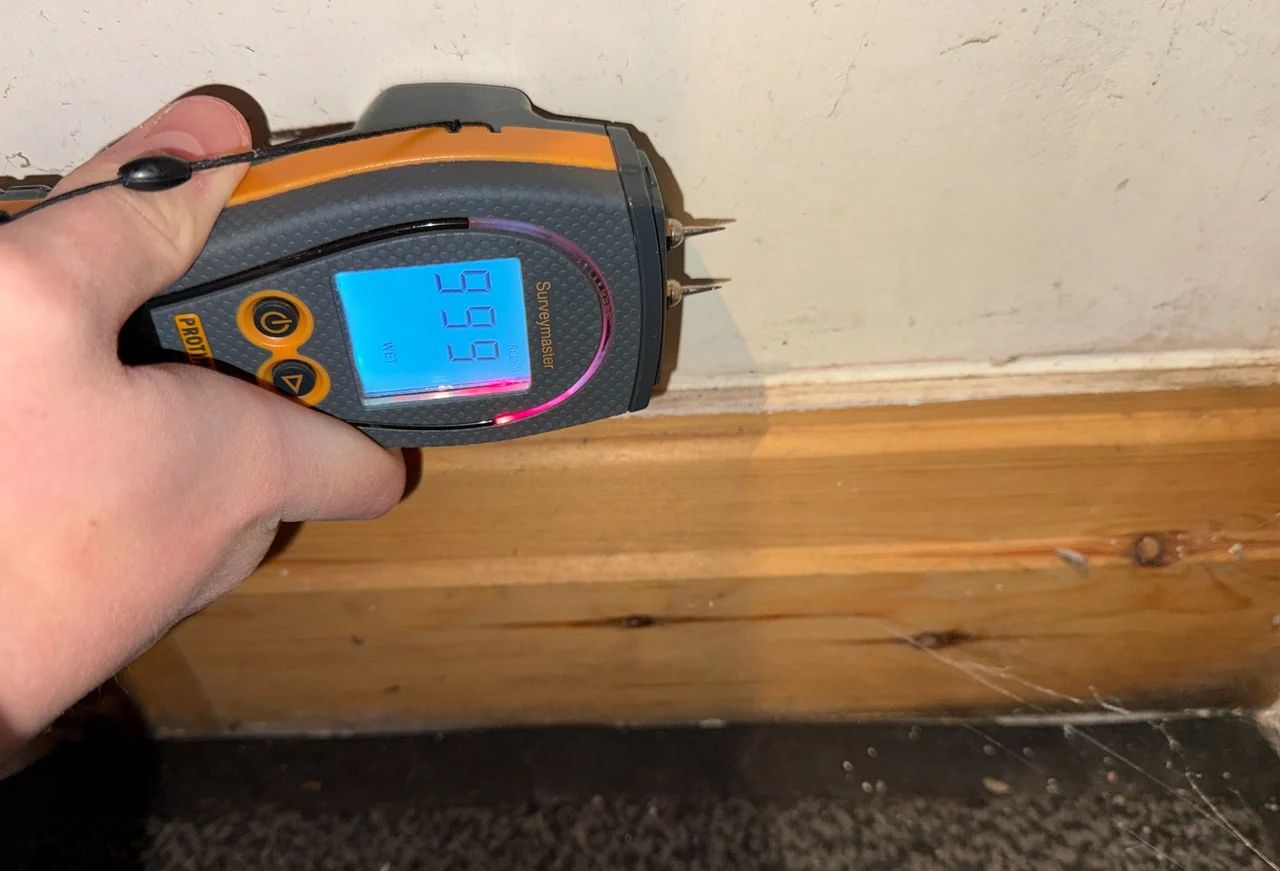
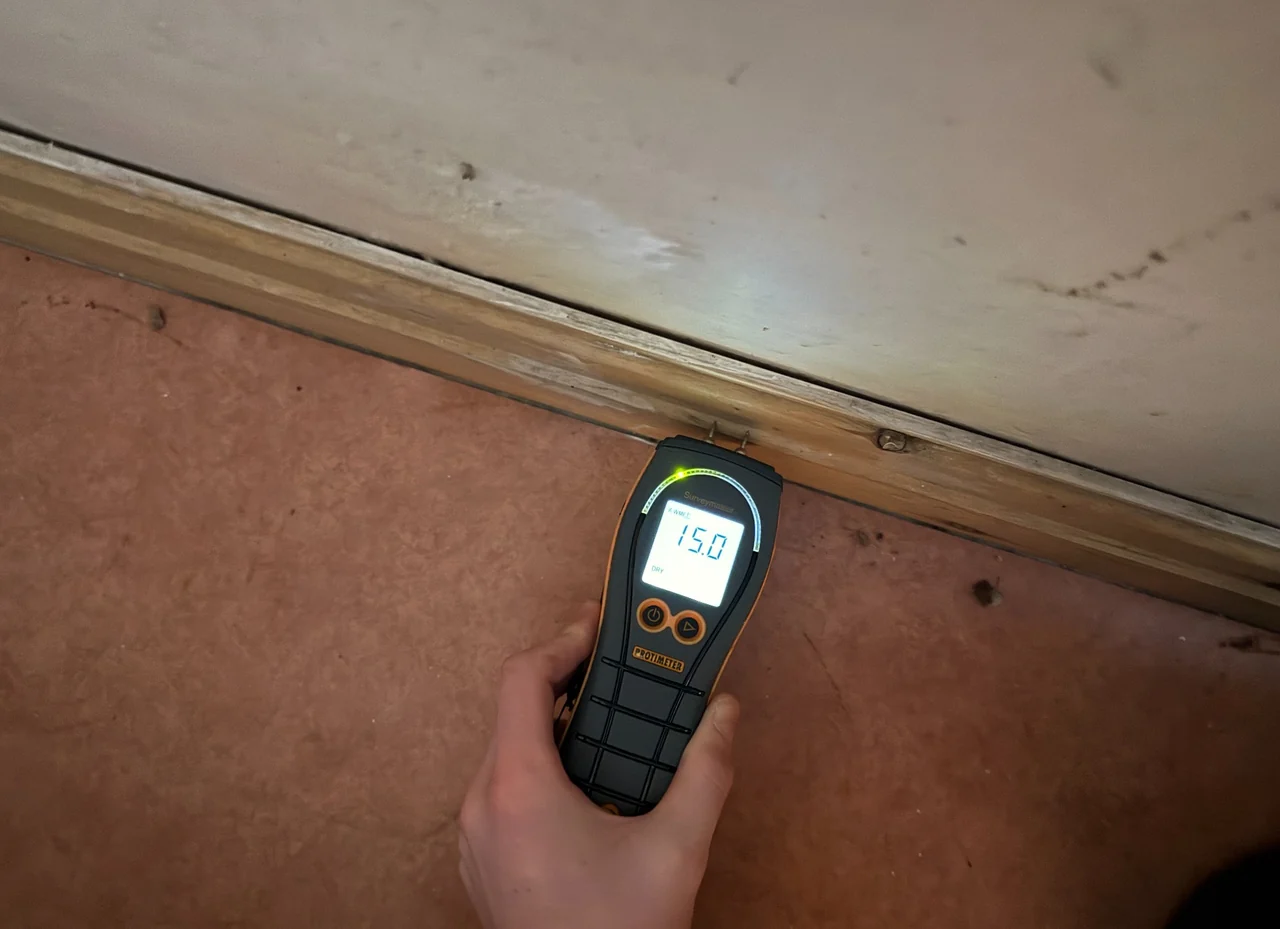
Readings from plaster and nearby timber can help build a pattern, but the materials and the meter’s measurement mode matter. A high response at plaster can be influenced by factors other than moisture, including salts or conductive material. We consider these findings alongside staining, construction, ventilation and likely moisture routes before judging the most probable cause.
Comparing meter responses at plaster and nearby timber can help inform an assessment. The photographs show a relative response at plaster and a timber reading on a different scale. The displayed numbers are not directly comparable and do not, by themselves, establish rising damp or failure of a damp-proof course.
Historic movement and everyday ownership
The distortion to some elevations and partitions was considered largely longstanding. It required perspective, not automatic assumptions about subsidence. The property also brought additional purchase considerations, including historic modifications, access rights and the likely maintenance requirements of traditional construction.
Those points mattered because a buyer needed to know the type of building they were taking on, not simply receive a list of isolated faults.
What this example illustrates
The case demonstrates that surveying older masonry is an exercise in interpretation: moisture, movement and past repairs must be considered together before presenting an expensive or invasive solution as necessary.
These anonymised case studies are selective summaries of particular issues considered during individual inspections. They are not complete survey reports and do not reproduce every observation, limitation or recommendation. They describe findings at the inspection, not the property’s present condition. The content is for general information only and must not be relied upon as a survey, diagnosis, repair specification or professional advice for any property. Property-specific advice requires a separate instruction under agreed terms of engagement. Photographs may show equivalent features or inspection methods from other Riley James inspections.