
Selected observations and purchase advice
- Historic underpinning was reported as part of earlier upgrading, but its extent was not established.
- Concrete at the wall bases was considered alongside the reported underpinning history; it did not independently confirm the concealed foundation work.
- The building’s visible condition and any current movement were separate questions.
- Potential consequences for insurance, mortgageability and resale were important purchase considerations.
A previous repair changes the questions a purchaser must ask
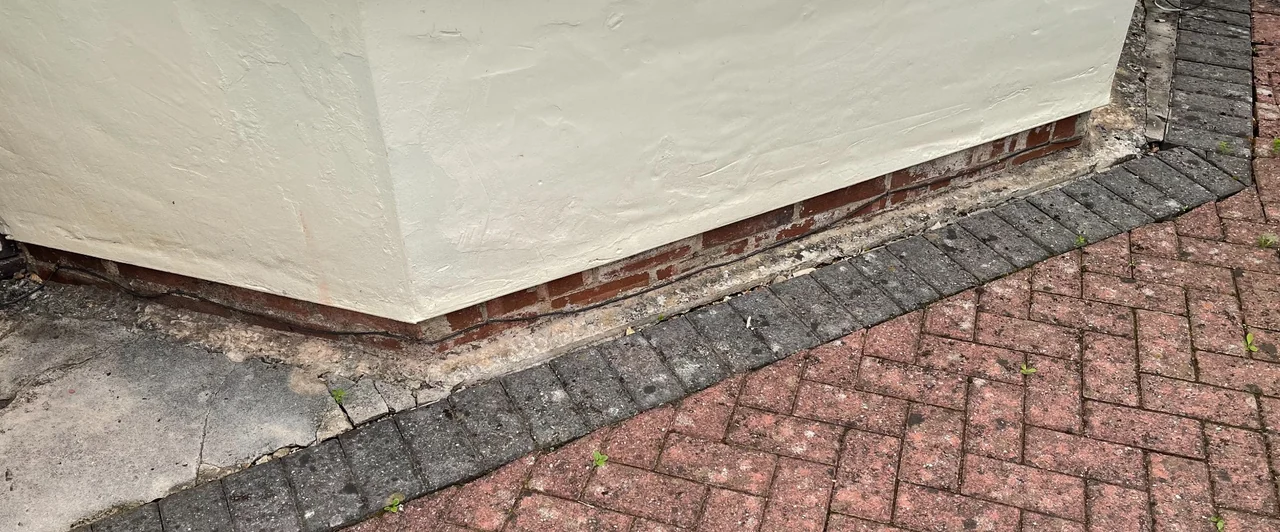
Concrete was visible around the base of the external walls. This was consistent with the reported history, but surface concrete could have other purposes and did not independently confirm underpinning or establish its extent, specification or adequacy.
The precise extent of the underpinning was not established in the information available at inspection. We explained why the scope, reason, completion evidence and any associated certification needed to be clarified, rather than assuming that the original movement was either continuing or permanently resolved.
The condition of the visible building fabric was assessed separately. The existence of earlier underpinning did not, by itself, demonstrate current structural failure.
Deteriorating render was a separate repair issue
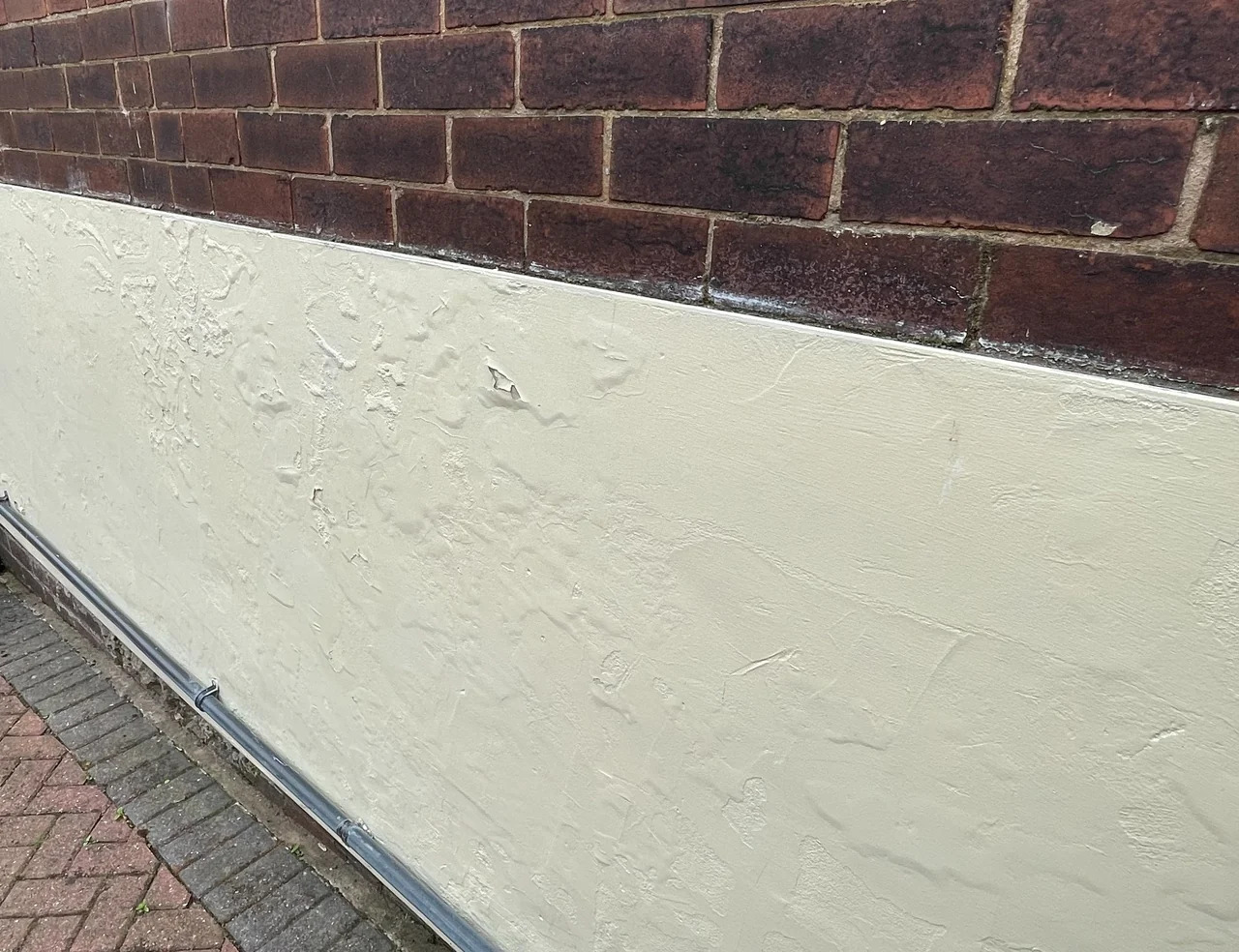
A low-level rendered section may have covered previously damaged brickwork, potentially associated with historic movement. It could also have been an economical alternative to cutting out and replacing bricks, or a decorative treatment. Its purpose and whether it was installed alongside the underpinning were not established.
The render itself showed signs of deterioration and debonding from the masonry backing. That was a separate maintenance issue to address when planning repairs; neither the rendered band nor its deterioration established that subsidence was continuing.
The financial consequences can outlast the building work
The report noted that lenders and insurers may take different positions on an underpinned property. Cover availability, policy terms, mortgage security and eventual resale can therefore become part of a purchaser’s decision even when the physical repair is historical.
It was important to establish insurance on suitable terms and to make the purchaser aware of the property’s documented history. That was a practical buying consideration, not an instruction to commission specialist reports as an end in itself.
What this example illustrates
This is a different kind of surveying judgement: recognising how a historical structural intervention can influence lending, insurance and marketability, while avoiding the unsupported conclusion that subsidence was active during the inspection.
These anonymised case studies are selective summaries of particular issues considered during individual inspections. They are not complete survey reports and do not reproduce every observation, limitation or recommendation. They describe findings at the inspection, not the property’s present condition. The content is for general information only and must not be relied upon as a survey, diagnosis, repair specification or professional advice for any property. Property-specific advice requires a separate instruction under agreed terms of engagement. Photographs may show equivalent features or inspection methods from other Riley James inspections.