
Selected observations and purchase advice
- Most visible parts of the subfloor void appeared dry.
- Local damp conditions near the kitchen and entrance suggested insufficient cross-ventilation.
- The front access step appeared to obstruct an air brick; adapting it and adding ventilation were advised.
- The step’s height and position could also allow moisture to bypass the likely damp-proof course level.
A closer look at ventilation rather than a blanket diagnosis
The pattern observed was considered consistent with condensation and inadequate cross-ventilation in particular sections of the void. We advised improving the movement of air with additional air bricks, while taking account of the floor arrangement and the available openings.
Load-bearing partitions restricted the sightlines under the house. The report did not claim to have inspected every joist or sleeper wall, and the absence of visible infestation in the accessible areas could not be extended automatically to the concealed portions.
The entrance step affected ventilation and moisture protection
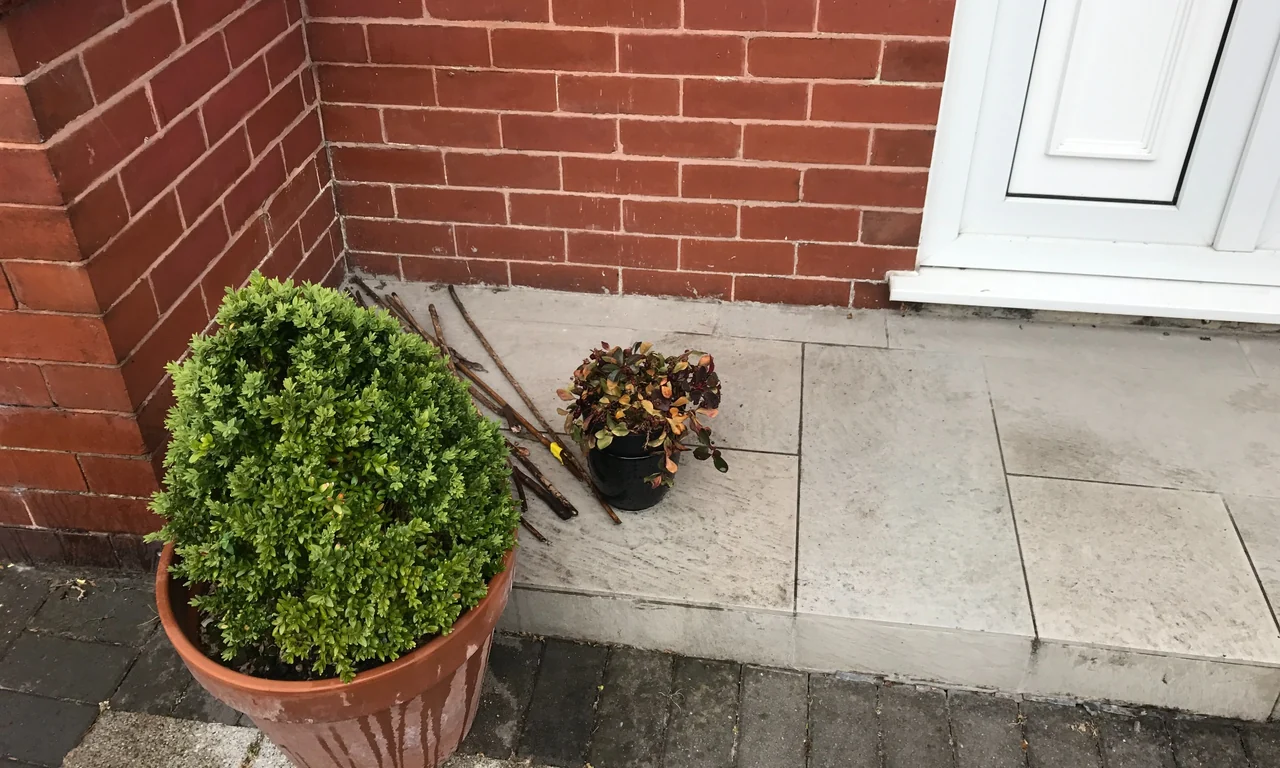
The front access step appeared to have blocked an air brick. The report identified this as a possible contributor to poor airflow beneath the floor and advised adapting the step so that ventilation was not compromised.
The step also sat close to the likely level of the damp-proof course, the barrier that limits moisture rising through the wall. Although the course was not fully visible, the step’s height and contact with the wall could allow moisture to bypass it and enter the brickwork. This was a potential moisture route, not confirmed damp-proof course failure. The course’s actual position and the adjoining construction needed checking when planning changes to the step.
Why proportion matters
The useful conclusion was both practical and balanced: most of what could be seen was dry; some sections would benefit from better ventilation; and any hidden deterioration could only be identified when access became available.
That approach gave the purchaser a sensible improvement to consider without suggesting that wholesale replacement of the suspended floor was justified by the limited observations.
What this example illustrates
The practical advice was to restore airflow at the entrance step and provide additional air bricks where needed, while recognising that most visible areas were dry. Alterations to the step also needed to account for potential moisture bridging at the likely damp-proof course level.
These anonymised case studies are selective summaries of particular issues considered during individual inspections. They are not complete survey reports and do not reproduce every observation, limitation or recommendation. They describe findings at the inspection, not the property’s present condition. The content is for general information only and must not be relied upon as a survey, diagnosis, repair specification or professional advice for any property. Property-specific advice requires a separate instruction under agreed terms of engagement. Photographs may show equivalent features or inspection methods from other Riley James inspections.