
Selected observations and purchase advice
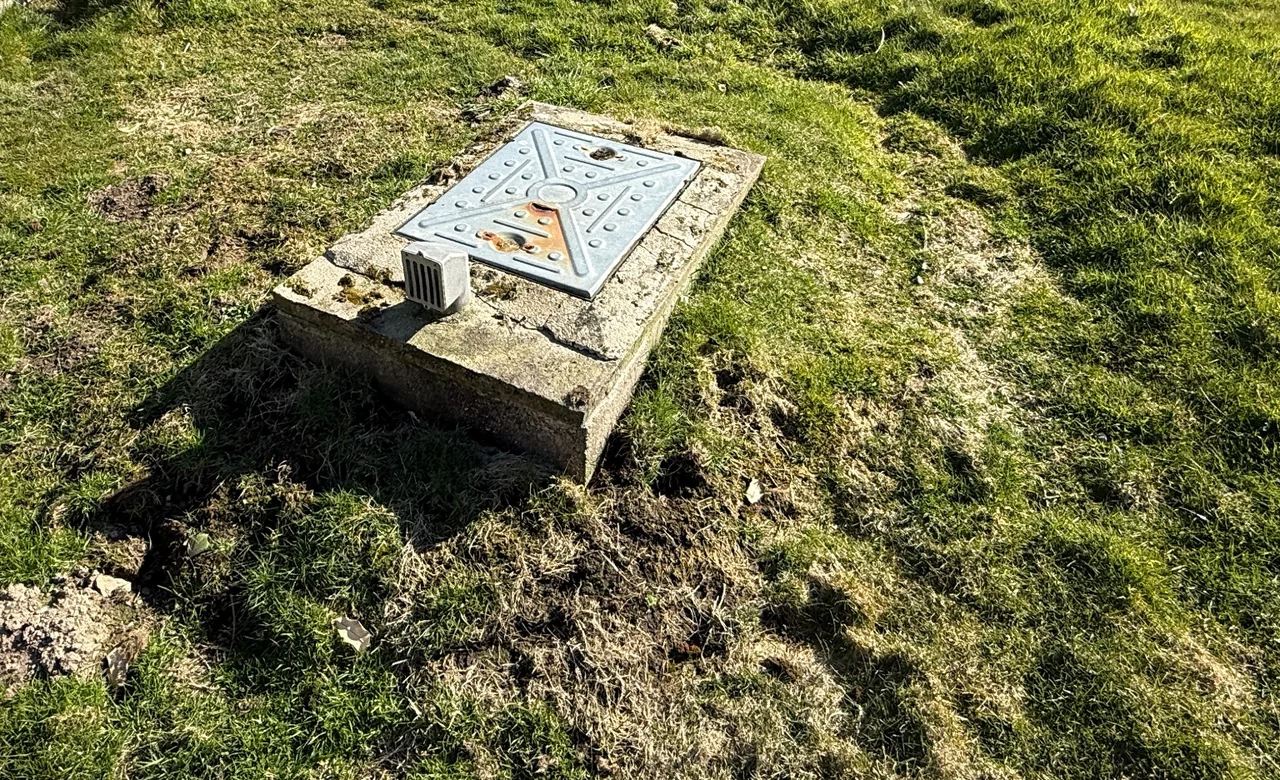
- Wastewater was seen close to the cover of one accessible private septic inspection chamber.
- Simple internal flush tests were satisfactory; other chambers and the outfall could not be verified.
- The distinction between foul and rainwater disposal and Wales-specific rules informed the buyer’s decisions.
Positive flush tests were useful but not the whole answer
Simple flush tests inside the property did not reveal backflow or internal blockage. Above-ground waste pipework was broadly serviceable, without significant leakage observed. Those were positive findings and worth recording.
Other chamber covers could not be safely lifted, however, so neither the overall condition of the tank nor its actual discharge route was fully established. The system’s recorded liquid level was an observation, not proof of a particular hidden failure or an overflowing discharge.
The disposal route and rainwater separation mattered
The report raised two different questions: where treated effluent discharged and whether rainwater gutters fed the same private foul system. If surface water is incorrectly connected to a foul-only septic system, additional water could compromise its capacity and treatment performance.
For a property in Wales, the relevant registration, discharge and system rules are administered by Natural Resources Wales. We highlighted the importance of establishing the actual outfall and keeping a realistic maintenance plan; a non-compliant discharge was a possibility to resolve, not a breach that the visual inspection had proved.
A different way of living, with different running costs
Someone accustomed to mains drains may never have arranged septic tank maintenance or considered where effluent goes. We explained the need to understand the type of system, maintenance and emptying arrangements, responsibility for the outfall, any required permissions and possible upgrade costs. That is useful ownership advice even where internal plumbing appears to work normally.
The same broader question applies to other rural purchases. Mains gas may be unavailable, and a property may instead use heating oil, LPG or another independent fuel arrangement. Those services can bring fuel deliveries, storage equipment, periodic servicing, safety requirements and running costs that are unfamiliar to a purchaser moving from a conventional mains-connected home. These are examples of matters to establish for an individual property, not claims that oil or LPG was installed at this inspected house.
What this example illustrates
The value of the survey was to connect an unfamiliar private drainage arrangement with the purchaser’s likely responsibilities and costs. We help buyers understand not only the building they like, but whether its services and practical demands fit the life they intend to lead there.
These anonymised case studies are selective summaries of particular issues considered during individual inspections. They are not complete survey reports and do not reproduce every observation, limitation or recommendation. They describe findings at the inspection, not the property’s present condition. The content is for general information only and must not be relied upon as a survey, diagnosis, repair specification or professional advice for any property. Property-specific advice requires a separate instruction under agreed terms of engagement. Photographs may show equivalent features or inspection methods from other Riley James inspections.