
Selected observations and purchase advice
- The first-floor front stone elevation exhibited outward bulging.
- The movement appeared historic on visual assessment; its progression could not be established by a single inspection.
- Monitoring, compatible masonry maintenance and awareness of retaining structures were the proportionate advice.
What the wall was telling us
The building had undergone settlement and distortion over a considerable period. The visible pattern was not judged to require immediate rebuilding, but a single visual inspection could not establish whether all movement had ceased or verify the wall’s structural capacity. We recommended monitoring the first-floor masonry for further outward movement, with engineering assessment and any additional restraint considered if the findings or subsequent changes warranted them.
There was also historic fracturing to mortar pointing. Rather than suggesting wholesale rebuilding, the report advised appropriate local repointing and an understanding that older buildings can experience minor seasonal movement.
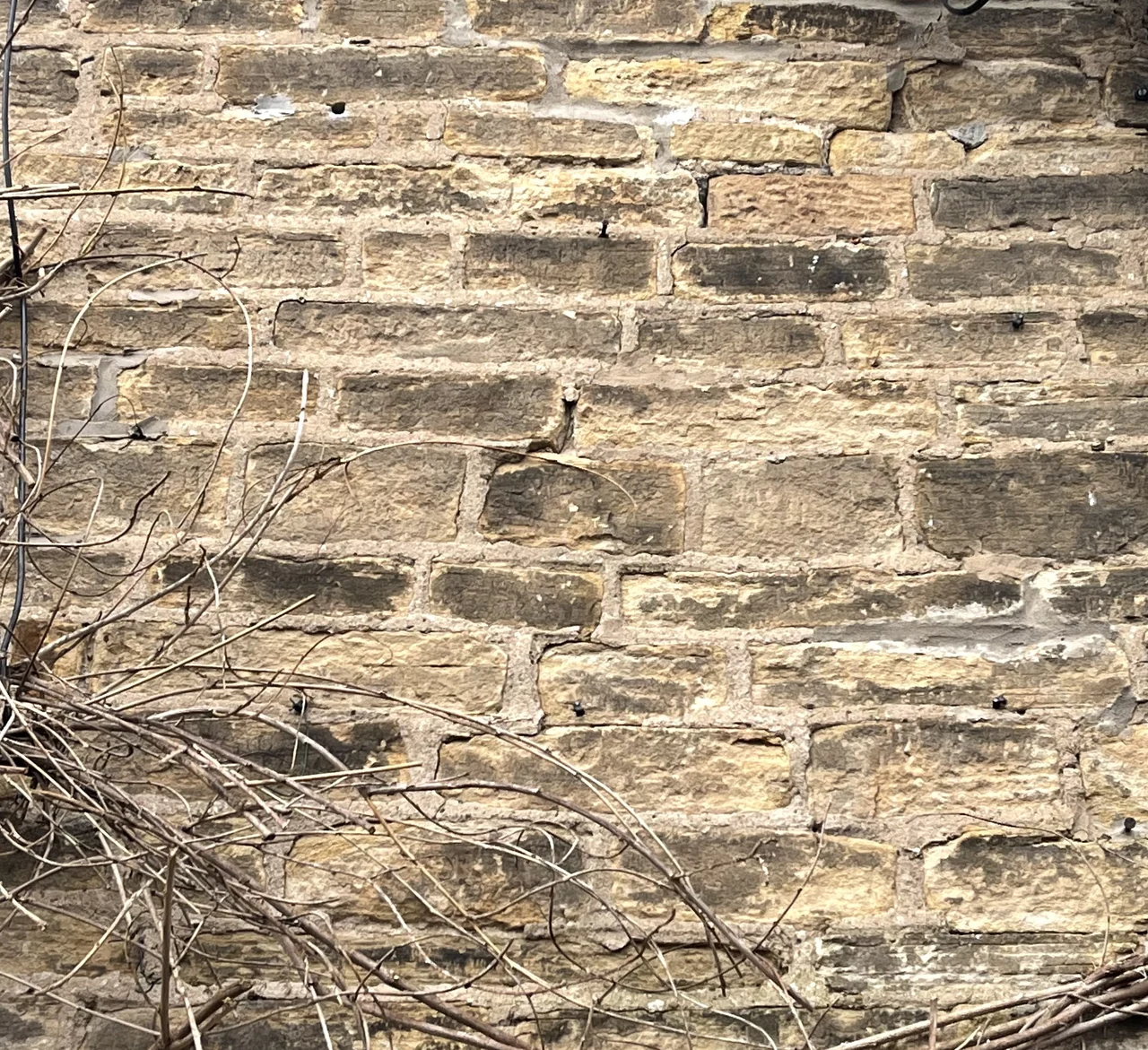
Traditional stone needs appropriate repairs
The walls included historic stone masonry with areas of render and pointing. We explained why hard cement-based materials can be unsympathetic to older stonework: reduced flexibility and moisture movement can contribute to deterioration. Where repointing or render work was undertaken, lime-based materials were advised.
The sloping plot and its retaining walls introduced a separate maintenance responsibility. It was important to understand the land and boundaries as well as the house, but no failure of the front elevation or retaining structures was presented as proven.
What this example illustrates
The lesson is not that bulging masonry should be ignored; it is that its age, pattern, associated defects and apparent stability must be assessed before recommending drastic repairs. At this inspection, monitoring and proportionate maintenance were the reasoned conclusions.
These anonymised case studies are selective summaries of particular issues considered during individual inspections. They are not complete survey reports and do not reproduce every observation, limitation or recommendation. They describe findings at the inspection, not the property’s present condition. The content is for general information only and must not be relied upon as a survey, diagnosis, repair specification or professional advice for any property. Property-specific advice requires a separate instruction under agreed terms of engagement. Photographs may show equivalent features or inspection methods from other Riley James inspections.