
Selected observations and purchase advice
- Movement evident across the property appeared generally old and longstanding.
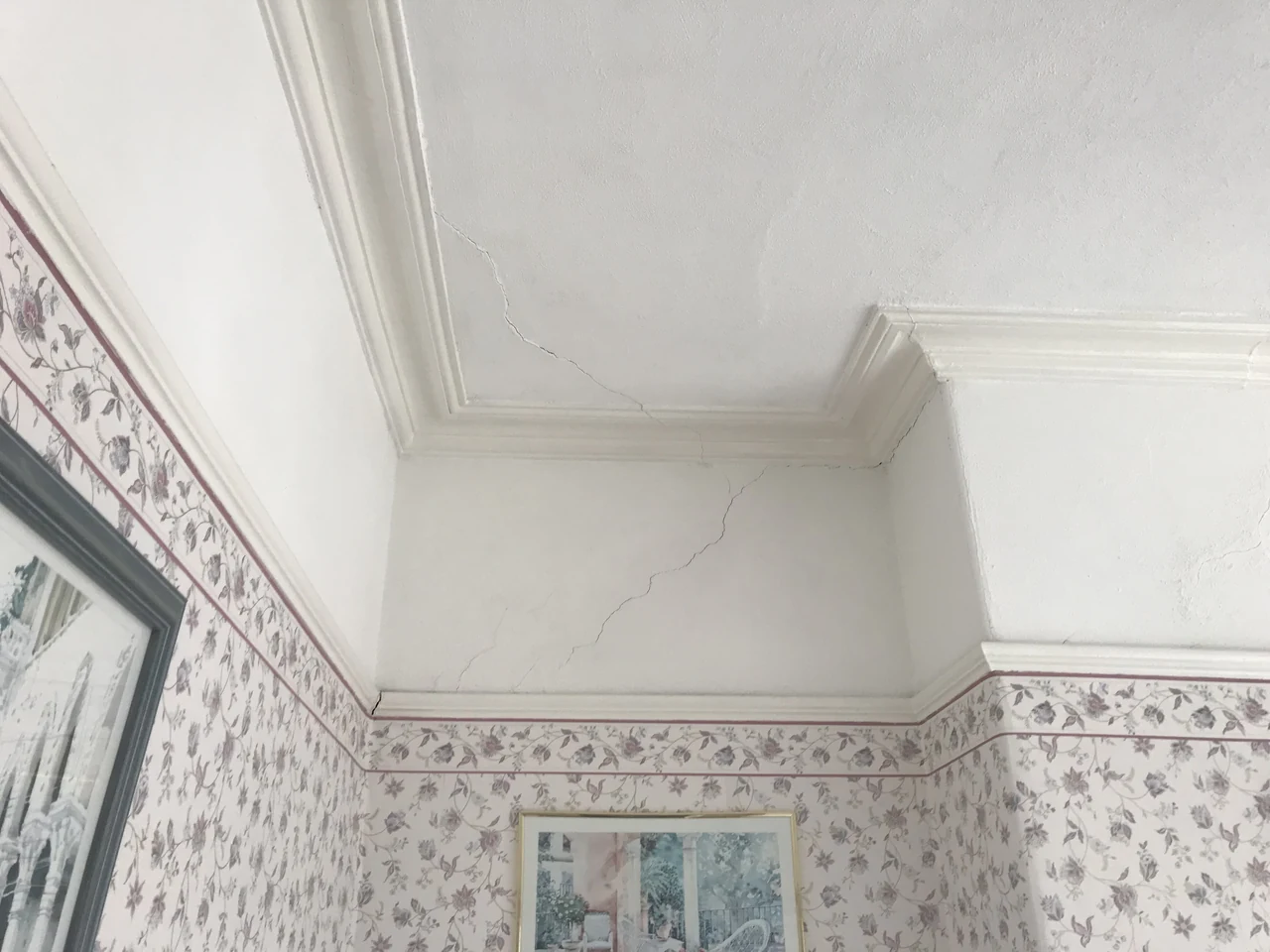
- Fracturing to the plaster finish of a bedroom party wall warranted an engineer’s assessment of whether precautionary strengthening was needed.
- Any necessary work was to be specified and priced before the purchaser made a legal commitment.
The general picture and the particular concern
The semi-detached house showed evidence of movement internally and externally. In the main, this was considered typical of the property’s age rather than an indication of a widespread structural problem requiring immediate major intervention.
There was, however, fracturing to the plaster finish of the party wall in a front bedroom. Although the report attributed the observed fracturing and distortion to historic settlement, it recommended that a structural engineer assess that area and establish whether precautionary strengthening was appropriate.
Understand the repair before agreeing the purchase
The next step was a targeted engineering assessment, rather than simply filling the cracks or assuming that the wall needed extensive rebuilding. The visible plaster finish could not establish the full condition of the construction behind it.
An engineer could consider local strengthening, including whether masonry stitching would be suitable, once the wall had been assessed. The appropriate repair could not be specified from the plaster cracking alone.
If the further investigation identified necessary repairs, the purchaser was advised to obtain quotations before entering into a legal commitment. That would allow the nature, disruption and cost of the work to inform the buying decision and any price discussion.
What this example illustrates
A useful survey distinguishes the building’s general history from the specific areas that need closer examination. Here, the value lay in identifying a focused structural question and giving the purchaser a route to understand it before accepting the liability.
These anonymised case studies are selective summaries of particular issues considered during individual inspections. They are not complete survey reports and do not reproduce every observation, limitation or recommendation. They describe findings at the inspection, not the property’s present condition. The content is for general information only and must not be relied upon as a survey, diagnosis, repair specification or professional advice for any property. Property-specific advice requires a separate instruction under agreed terms of engagement. Photographs may show equivalent features or inspection methods from other Riley James inspections.