
Selected observations and purchase advice
- Damp staining raised concern about moisture penetration; the roof assessment supported budgeting for renewal.
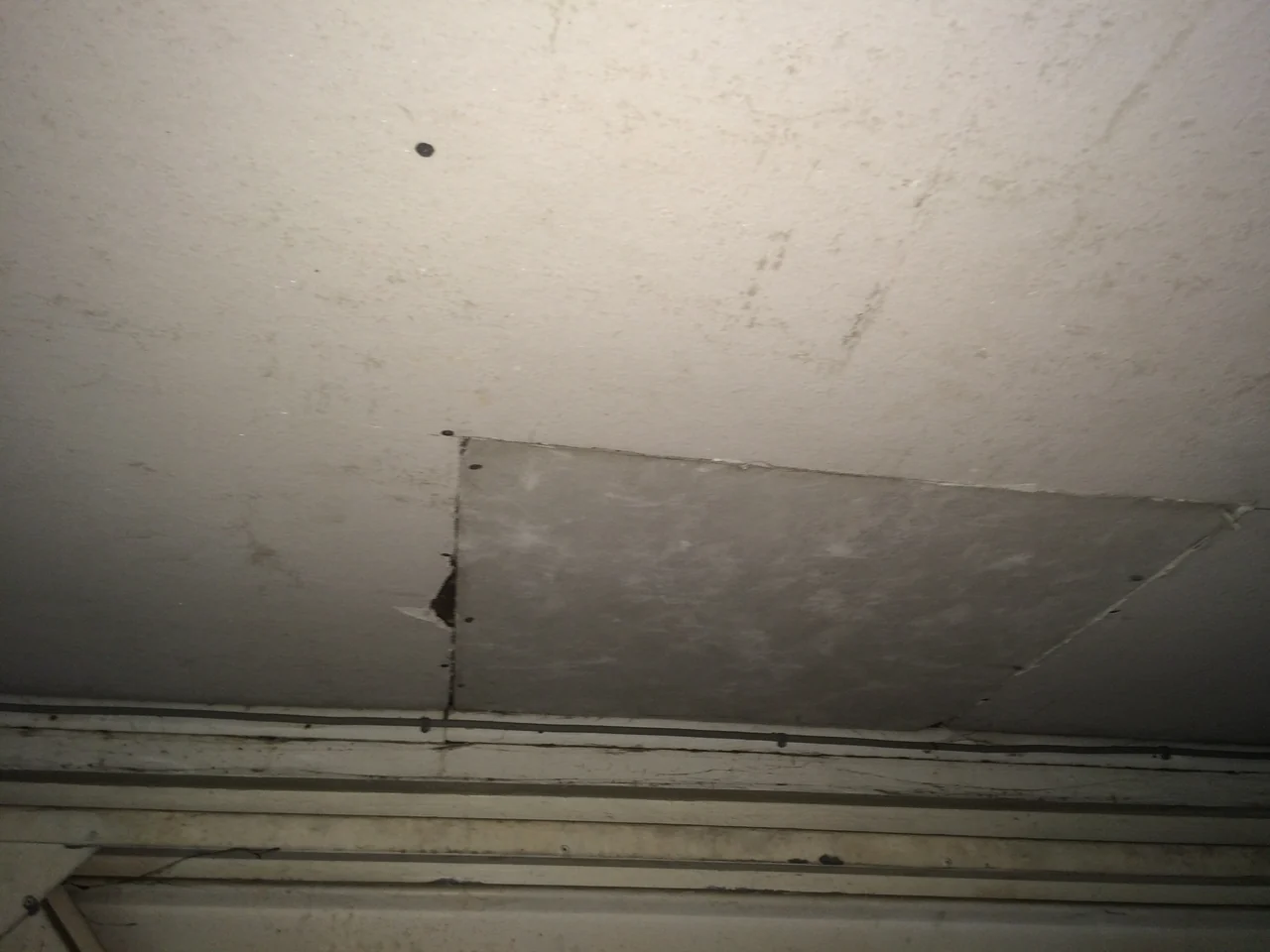
- Ceiling boards were suspected of containing asbestos; this was a visual assessment, not a confirmed laboratory result.
- The garage roof beams and their end bearings showed no signs of distress, although precautionary improvements to the bearing packers were advised.
Look beneath the covering when budgeting for reroofing
The report anticipated garage reroofing in the near future. Staining to the ceiling boarding supported the need to investigate moisture entry, but its appearance alone could not establish whether leakage was active or how long the covering would remain serviceable.
The ceiling boards were considered potentially asbestos-containing. Their identification and appropriate handling needed to be allowed for before disturbance or removal. That could affect how the reroofing work was organised and what it would cost; the photograph and visual inspection did not establish the material’s composition.
Keep the repair scope proportionate
The two steel beams supporting the garage roof and their end bearings appeared reasonable, with no signs of distress during the inspection. The report advised precautionary replacement of bearing packers with a material that could not be crushed, rather than describing the whole supporting structure as failed.
For the buyer, the practical task was to budget for the ageing roof covering, establish how the suspect boarding should be managed and include the specific improvements to the support details. Those separate observations helped define the likely work without assuming every part of the garage needed replacement.
What this example illustrates
A realistic garage repair budget should consider the layers beneath the roof covering and how they will be handled. This inspection distinguished likely reroofing and suspect ceiling materials from a supporting structure that showed no visible distress.
These anonymised case studies are selective summaries of particular issues considered during individual inspections. They are not complete survey reports and do not reproduce every observation, limitation or recommendation. They describe findings at the inspection, not the property’s present condition. The content is for general information only and must not be relied upon as a survey, diagnosis, repair specification or professional advice for any property. Property-specific advice requires a separate instruction under agreed terms of engagement. Photographs may show equivalent features or inspection methods from other Riley James inspections.