
Selected observations and purchase advice
- Roof valley leakage had already resulted in visible decay to associated timbers.
- Failure of valley weatherproofing called for physical repairs rather than simply redecoration.
- Possible dry rot was a concern, not a confirmed fungal identification.
The repair was more than stopping the leak
We found failed valley weatherproofing, internal damp staining and severely deteriorated timbers at adjoining roof junctions. The remedy had to address both the source of water penetration and the fabric damaged by it: renewing valley coverings and flashings, replacing affected boarding and other decayed timber, and then reinstating internal finishes.
That difference matters when setting a purchase budget. A relatively small area of visible water staining does not reveal how far moisture has travelled behind finishes or how much supporting timber may require replacement after years of inadequate maintenance.
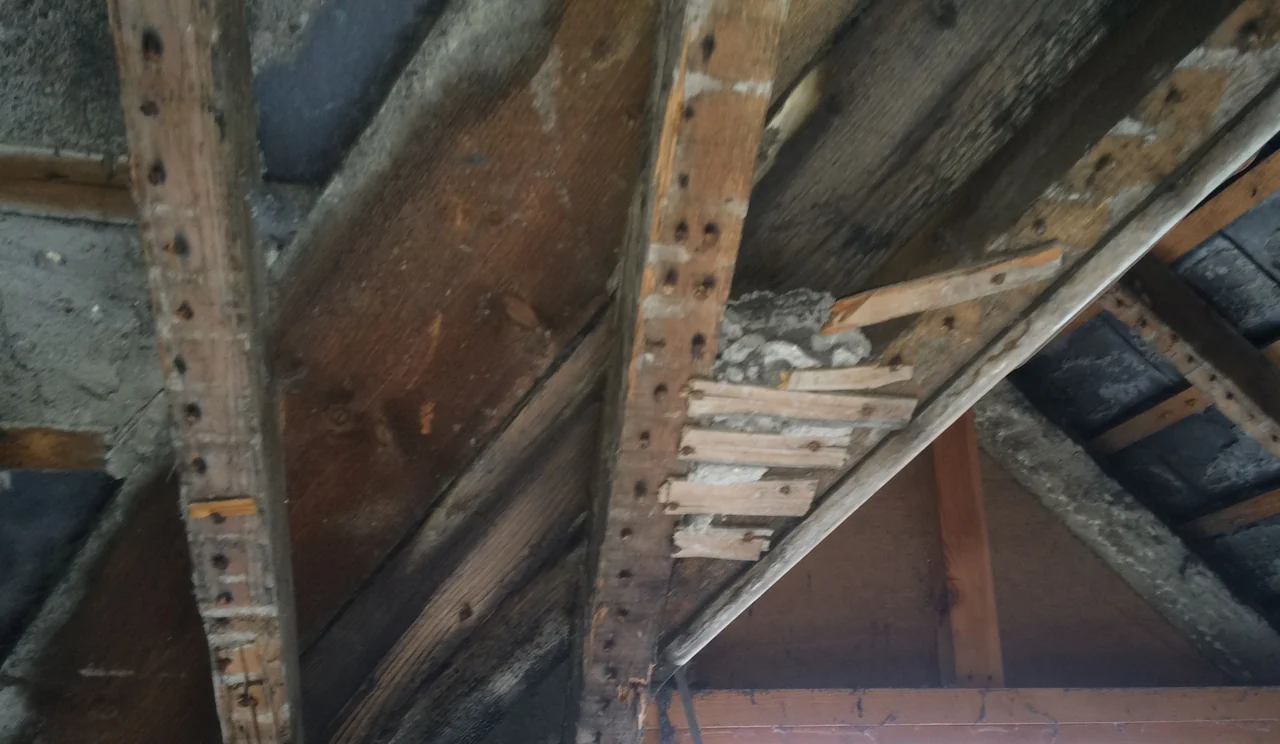
Longstanding moisture raised concern about infestation and dry rot
Decayed timber and loose fragments displaying cuboidal cracking raised concern about possible dry rot. The wider inspection also noted evidence of woodworm and deterioration to other timber floors. We did not claim that dry rot had been conclusively identified, but the possibility materially increased the potential extent and cost of treatment and replacement.
Our advice made the buyer aware that the expenditure could extend well beyond a roof leak repair and localised plastering. Establishing the full scope and cost of timber repairs before purchase was essential to an informed decision.
What this example illustrates
The important finding was not simply a leaking roof, but the disproportionate damage that prolonged water penetration had caused. We consider the accessible evidence and the potential for concealed damage, explaining where further investigation is needed to establish the repair costs.
These anonymised case studies are selective summaries of particular issues considered during individual inspections. They are not complete survey reports and do not reproduce every observation, limitation or recommendation. They describe findings at the inspection, not the property’s present condition. The content is for general information only and must not be relied upon as a survey, diagnosis, repair specification or professional advice for any property. Property-specific advice requires a separate instruction under agreed terms of engagement. Photographs may show equivalent features or inspection methods from other Riley James inspections.