
Selected observations and purchase advice
- Sections of render had blown and detached, requiring attention to the render itself.
- Gutters and flashings directed water towards vulnerable render and stone junctions.
- Projecting stone lintels and parapet details could retain moisture at exposed edges.
- Render application conditions were a potential contributing factor, not a proven cause.
The path taken by rainwater
Some gutters and flashings appeared to finish short of the roof areas they were intended to drain. That allowed rainwater to fall or cascade against adjoining render and stonework below. Elsewhere, stone lintels projected beyond the render face and formed horizontal ledges capable of retaining water at vulnerable junctions.
The parapet and stone/render interfaces also lacked protected edge details to help shed moisture clear of the rendered surface. These observations mattered when planning patch repairs: replacing the detached render without correcting the associated water exposure could leave the repaired areas vulnerable to further deterioration.
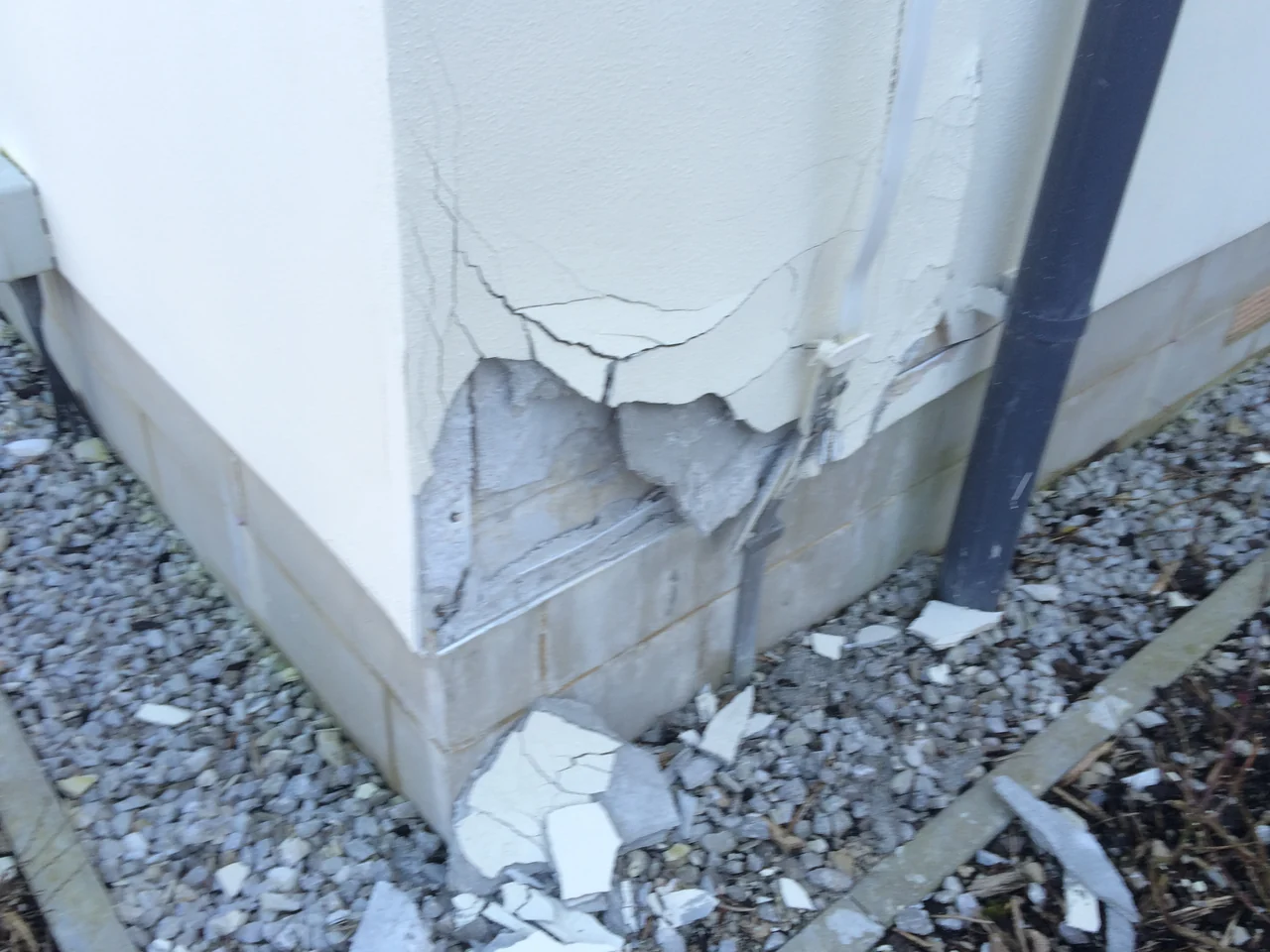
Repairing the render and addressing the contributing details
We also raised possible shortcomings in the conditions or workmanship associated with the render application. Those were professional possibilities discussed in the written advice, not tested or conclusively established facts.
Localised repairs needed to address the blown and detached render, with the roof drainage and exposed junctions considered alongside the remedial specification. The extent of loose render would influence how much needed removal and replacement. Possible application shortcomings also needed consideration when choosing a suitable repair approach.
What this example illustrates
A patch repair needs to address both the detached render and the conditions that may have contributed to its failure. Understanding rainwater discharge, exposed junctions and the existing render helps define a more durable repair and a realistic budget.
These anonymised case studies are selective summaries of particular issues considered during individual inspections. They are not complete survey reports and do not reproduce every observation, limitation or recommendation. They describe findings at the inspection, not the property’s present condition. The content is for general information only and must not be relied upon as a survey, diagnosis, repair specification or professional advice for any property. Property-specific advice requires a separate instruction under agreed terms of engagement. Photographs may show equivalent features or inspection methods from other Riley James inspections.