
Reviewed 25 October 2026
Spray foam insulation: what buyers and sellers should check
Spray foam can alter how an existing roof handles air, heat and moisture. Its presence is not itself proof of decay, but neither is a roof space that appears dry proof that the roof will perform satisfactorily for years to come.
The question is whether the roof construction, installation evidence and remaining inspectable structure allow the buyer and lender to understand the risk.
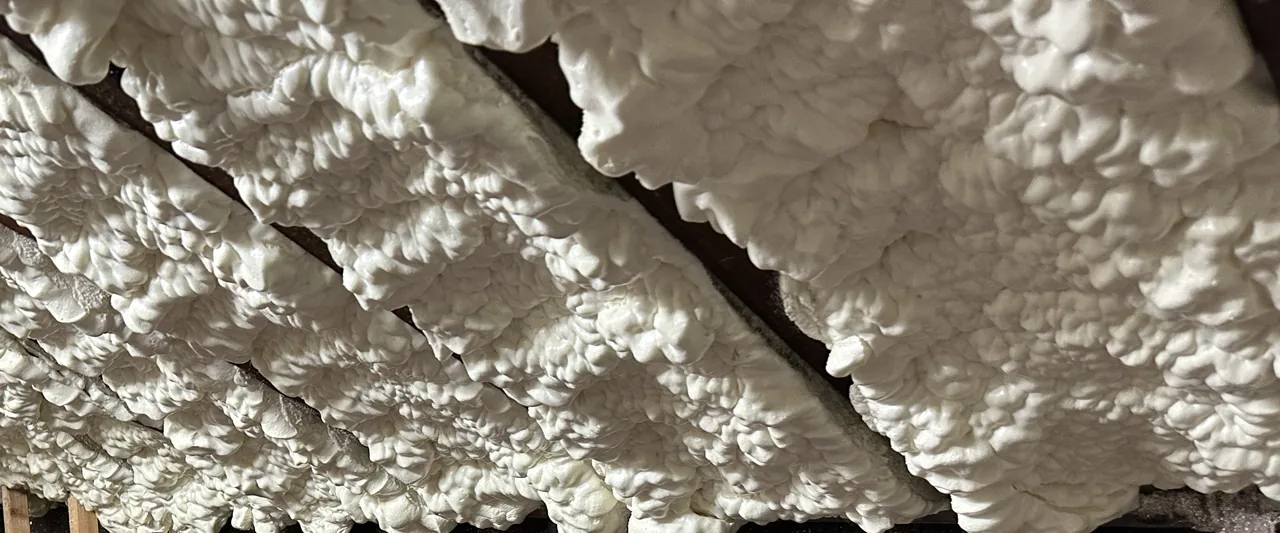
Spray foam on the underside of a roof, photographed during one of our inspections.
The visible coating shows why access to the underlying roof materials matters. A photograph alone cannot establish the foam type, moisture behaviour or condition of concealed timber.
Work through the decision
Follow the four steps in order, or open the detail where you need a closer explanation.
- Step 1 of 4
Understand what is concealed
Foam can obscure the roof structure and change how moisture moves through it. A dry appearance on the day does not answer every question.
Your next moveEstablish which parts of the roof remain visible before relying on a visual inspection.
Read the detail
Why buyers encounter concerns
Retrofitted spray polyurethane foam is often applied to the underside of sloping roofs. The change can affect ventilation and make parts of rafters, battens, underlay or the underside of the roof covering more difficult to examine. Different products and applications behave differently; the roof must be considered as a complete assembly.
A buyer can be reassured that no significant condensation was visible at inspection while still needing advice about moisture behaviour over time. Water may enter behind a coating without becoming visible immediately. Older traditional roofs and impermeable underfelt require especially careful consideration.
- Step 2 of 4
Gather the evidence
Installation records and the lender’s requirements help define what needs investigating. A warranty alone cannot establish the condition of hidden timber.
Your next moveRequest the installation documents and lender’s exact requirements before committing.
Read the detail
Questions to ask before committing
Ask for the product name, installer’s details, installation date, the roof survey and design addressing condensation risk, information on ventilation, the manufacturer’s instructions, available certification and warranties. Establish whether the roof was watertight and structurally sound before the foam was applied.
Check the lender’s current lending policy and what its valuer requires. A surveyor may identify limitations or recommend a defined further investigation where structural timbers are concealed. No universal rule says every roof with spray foam must be removed; equally, a general installation guarantee does not prove the condition of hidden timber.
- Step 3 of 4
Plan for future repairs
The decision involves the roof’s remaining life as well as its current appearance. Removal or replacement can affect retained timber and the wider repair budget.
Your next moveConsider the roof covering, access and insulation design together when planning work.
Read the detail
Older properties and future maintenance
Many traditional roofs were constructed with a different balance of ventilation and moisture movement from modern sealed assemblies. Introducing less permeable materials without suitable design can increase the risk of concealed dampness, timber deterioration and difficult roof repairs.
If the roof covering is nearing replacement, consider how foam removal, protection of retained timber and the revised insulation design would affect the overall project. Do not authorise indiscriminate stripping without understanding the construction, access, hazards and potential damage.
- Step 4 of 4
Agree a proportionate assessment
Independent advice separates visible defects, inspection limitations and potential future risks so you can decide what evidence is still needed.
Your next moveAgree the inspection scope and any further investigation before commissioning remedial work.
Read the detail
What an independent survey contributes
We look at visible roof condition, construction, observed dampness or decay, the extent of obscured timber, available ventilation and relevant documentation within the agreed inspection scope. The advice should distinguish observed defects from potential future risks.
That puts the likely consequences for maintenance, purchase negotiations, insurance, mortgageability and resale into context. Specialist testing, opening up or separate design advice may be required for matters a visual inspection cannot confirm.
Before you commit: buyer checklist
- Identify the foam type, installer and installation history.
- Obtain design, condensation risk and ventilation documents.
- Check the lender’s policy for the particular property.
- Confirm what structural timber remains visible.
- Understand any further investigation, repair or removal implications.
Professional guidance and official sources
These sources support the general guidance. Individual property advice depends on condition, location, scope and any current rules or lender requirements.
General buyer information for England unless otherwise indicated; not legal advice, a report on a specific building or a substitute for independent conveyancing or lender requirements.
Buying a property with similar concerns?
Tell us what you know about the property, your proposed use and any issues already raised by the lender or seller.