
Reviewed 25 October 2026
Mortgage valuation flagged a defect — what should you do next?
A lender's valuer may identify an issue that needs clarification before lending can proceed. The right response is to understand precisely what was reported, what remains uncertain and what evidence the lender needs, rather than to commission every possible specialist report without a plan.
The aim is an informed decision about the actual building, together with evidence appropriate to the lender’s query.
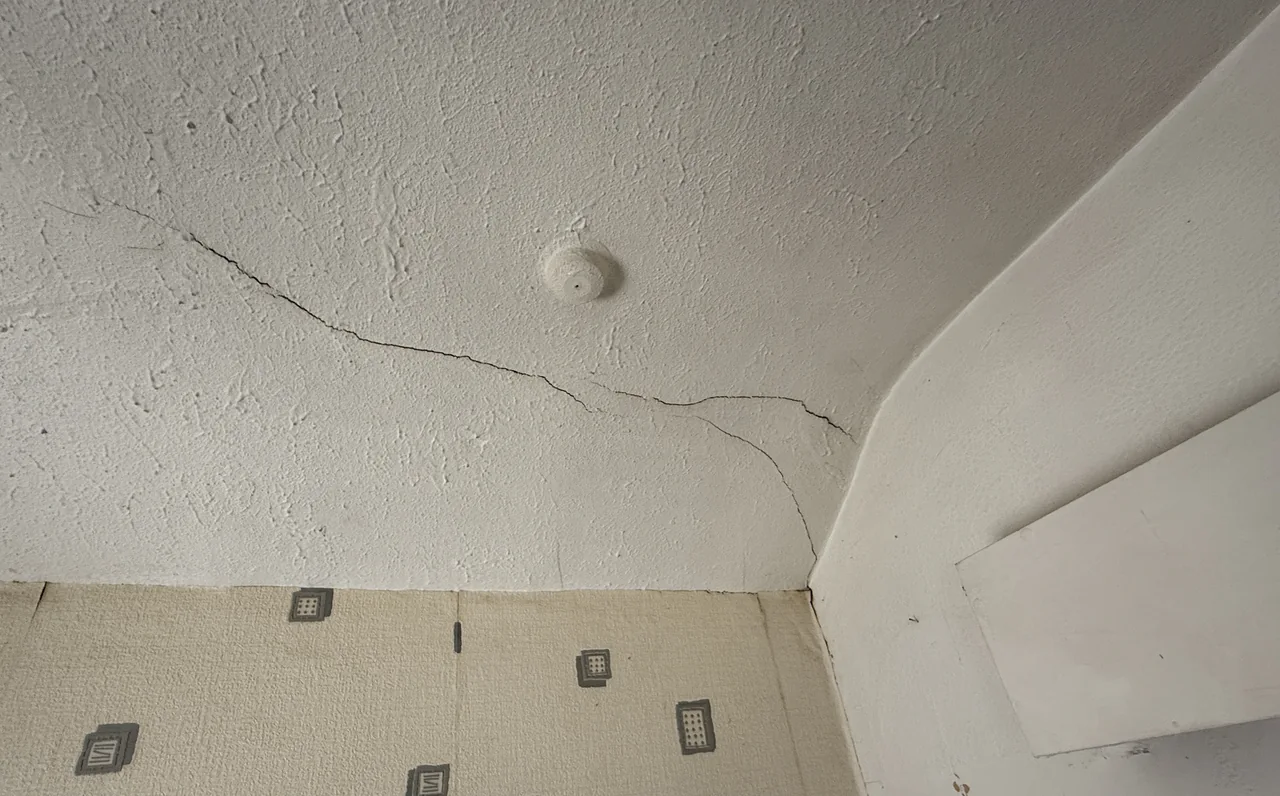
A visible ceiling crack recorded during an inspection.
The pattern, surrounding construction and history help determine whether further investigation is appropriate. This photograph alone does not establish the cause, active movement or a lender’s response.
Work through the decision
Follow the four steps in order, or open the detail where you need a closer explanation.
- Step 1 of 4
Get the exact question
A brief reference to cracking or damp can leave important uncertainty. The lender’s wording helps establish what evidence is required.
Your next moveObtain the valuation wording and any reporting conditions from your lender or broker.
Read the detail
Read the lender’s wording closely
A valuation prepared for mortgage security is not a full buyer’s survey. If it mentions structural movement, cracking, spray foam, roof condition, previous underpinning or damp, request the exact wording and any specific reporting requirements from your lender or broker.
An observation of cracking is not automatically evidence of active subsidence. Conversely, the absence of obvious movement at one visit does not establish the full history. The property’s construction, pattern of movement and available evidence determine what can responsibly be said.
- Step 2 of 4
Choose a suitable inspection
A defined concern may suit a targeted investigation; wider uncertainty may call for a fuller survey or another specialist.
Your next moveAgree the remit and check that the proposed professional meets the lender’s requirements.
Read the detail
When is a specific defect inspection appropriate?
Where one defined issue needs examination, a specific defect inspection may be proportionate. The agreed remit should cover the concern, relevant accessible areas, limitations, findings and practical next steps, but should not be mistaken for a complete inspection of the house.
If there are wider uncertainties, multiple alterations or a complex older building, a Level 3 Home Survey may be more useful. Sometimes a structural engineer, drainage specialist or testing contractor is needed for a tightly defined question beyond visual surveying.
- Step 3 of 4
Put the finding into context
Cause, severity, access and repair options matter more than the defect label alone. A report cannot guarantee a lending decision.
Your next moveUnderstand the likely repair scope and any further evidence the lender needs.
Read the detail
Repairs, mortgage conditions and future ownership
The useful advice connects cause, severity, likely repair scope, safe access costs and documentation to the purchase decision. For example, a minor defect at the roof edge can carry substantial scaffold costs, while longstanding distortion to an older wall may be manageable without extensive rebuilding.
Ask your broker whether the lender requires a particular professional, inspection scope or further certificate. We cannot promise that a lender will accept a report; the lender retains its own lending criteria.
- Step 4 of 4
Make an informed next move
The assessment should leave you clear about what is known, what remains uncertain and what action is proportionate.
Your next moveShare the property details, valuation wording and relevant history before instruction.
Read the detail
How to arrange an informed assessment
Share the mortgage valuation wording, the property address, age, known alterations and photographs where available. We can discuss whether the concern falls within our competence and agree the appropriate scope before taking an instruction.
The goal is to establish what is known, what remains uncertain and what action is proportionate, so that the buyer is not left guessing about repairs, potential costs or future saleability.
Before you commit: buyer checklist
- Obtain the lender’s precise defect wording.
- Confirm the lender’s report or specialist requirements.
- Explain the property’s age, construction and alterations.
- Agree whether a targeted investigation or a full survey is appropriate.
- Understand the likely repair, access and resale implications.
Professional guidance and official sources
These sources support the general guidance. Individual property advice depends on condition, location, scope and any current rules or lender requirements.
General buyer information for England unless otherwise indicated; not legal advice, a report on a specific building or a substitute for independent conveyancing or lender requirements.
Buying a property with similar concerns?
Tell us what you know about the property, your proposed use and any issues already raised by the lender or seller.